
Why Home Decor Stores Have High Return Rates
Home decor stores think returns are a logistics problem. Most of the time they're an information problem — and the fix starts on the product page.

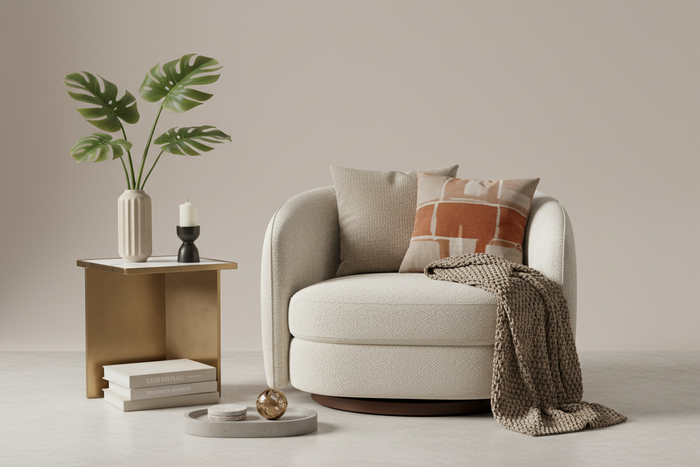
Furniture and home decor eCommerce has a return problem that most store owners attribute to the wrong cause. The assumption is that returns happen because customers change their mind, because the product looks different in person, or because shipping damage occurs. All of those things happen. But the most common cause of home decor returns is simpler and more preventable: the customer didn't have accurate dimensions before they bought.
A rug that's 180cm × 120cm doesn't look like 180cm × 120cm on a product page. A side table described as "compact" means something different to a buyer with a 45cm gap than to one with a 70cm gap. A wall art piece listed at 60cm wide ends up in a space where the buyer assumed it would fit — and it doesn't. These aren't failures of taste or product quality. They're failures of product page information.
The good news: information problems are fixable without redesigning the product, changing the price, or rebuilding the store.

The Home Decor Return Problem by The Numbers
According Shopify, online home decor return rates run between 25–40% for most stores, with furniture and large format items trending toward the higher end. This puts home decor above the overall eCommerce average of roughly 20–25%, despite the fact that home decor customers are typically more deliberate buyers than fashion shoppers — they're purchasing for a specific space, not browsing for inspiration.
The deliberateness of the purchase is part of what makes dimension-related returns so costly. A customer who returns a blouse because the fit isn't right has had a low-effort shopping experience. A customer who returns a dining table because it doesn't fit the space they measured has been waiting days or weeks for delivery, arranged help for assembly, and is now coordinating a return of a bulky, expensive item. The logistics cost on furniture returns can reach 20–65% of the item's original value — before the refund itself.
What drives home decor returns specifically:
- Dimension mismatch: Item doesn't fit the space — most common cause, almost entirely preventable with accurate measurement information
- Color discrepancy: Product looks different in the customer's lighting than in product photography — partially addressable through honest description
- Scale misread: Customer misjudges product size relative to the room — fixable with lifestyle photography and room-context images
- Incompatible with existing items: Style or size doesn't work with other furniture — addressable with detailed specifications

Why Size Charts Matter More in Home Decor Than Merchants Realize
The fashion industry has largely accepted that size charts are non-negotiable for apparel. The home decor industry hasn't reached the same consensus — but the underlying problem is identical. A customer who can't confidently verify that a product will work in their space before buying is a customer who's likely to return it after.
The difference is that home decor returns are disproportionately expensive. A returned t-shirt can be restocked. A returned coffee table requires reverse logistics, inspection, potential refinishing, and storage — all before it can be resold, often at a discount. The per-return cost in home decor is 3–5× higher than in fashion, which means the return rate doesn't need to be as high to create a significant operational problem.
Stores that implement detailed dimension guides — not just width × height × depth, but clearance requirements, weight, assembly dimensions, and how the item relates to standard room layouts — report meaningful reductions in dimension-related returns. The product page earns its keep by answering the questions a buyer would ask in a showroom.
How Lavar Adds Dimension Guides and Trust Signals to Home Decor Pages
Lavar is a Shopify app built for product labels, size charts, and GDPR cookie banners. For home decor stores, the size chart feature translates directly into dimension guides — the same tool that helps fashion shoppers find the right fit helps home decor buyers confirm the right fit for their space.
Dimension guides created in Lavar appear as a popup or modal on the product page — accessible without leaving the page or losing the buyer's place in their evaluation. No code changes required, and they work across all Shopify themes.
For home decor specifically, a well-built dimension guide includes:
- Overall dimensions (W × H × D) in both cm and inches
- Weight and what that means for installation or moving
- Clearance or breathing room recommendations (e.g., minimum 45cm walkway around a dining table)
- Seat height for chairs and sofas — often the deciding factor in comfort fit
- Assembly dimensions for flat-pack furniture (box dimensions vs assembled dimensions)
- Scale reference (e.g., "fits a 3m × 4m room with space to spare")

Using Badges to Reduce Hesitation on High-Consideration Items
Home decor purchases are high-consideration by nature. A $350 rug or a $600 sofa requires more confidence than a $35 t-shirt before a buyer commits. Product badges address hesitation at a different level than dimension guides — they reduce the perceived risk of the purchase rather than the dimensional uncertainty.
For home decor, the most effective badges are:
- Best Seller — communicates that other buyers have chosen this item and been satisfied; reduces the fear that an unusual piece is a risky choice
- New Arrival — creates freshness signal for seasonal collections or newly introduced styles
- Low Stock — meaningful for home decor where items genuinely go out of stock and reorder timelines are long; use only when accurate
- Handcrafted / Sustainably Made — communicates craft and values that resonate with home decor buyers specifically
Badges work best on collection pages where buyers are scanning products. A "Best Seller" badge on the right rug in a 40-item collection guides attention without requiring the buyer to click into each product to evaluate it.
The GDPR Angle for Home Decor Stores Selling to Europe
Home decor has strong markets in Germany, France, Scandinavia, and the UK — all under GDPR jurisdiction. If you're running remarketing campaigns to European visitors (and most home decor stores with paid traffic are), you need explicit cookie consent before placing tracking pixels.
Lavar includes a configurable GDPR cookie banner that covers this requirement without a separate app. For home decor stores with EU traffic, this matters for two reasons: legal compliance and ad performance. Remarketing campaigns that run without proper consent infrastructure are both a compliance risk and increasingly flagged by ad platforms.
Final Thoughts
High return rates in home decor aren't inevitable. They're largely a product page problem — buyers who return items didn't have the information they needed to buy correctly. Dimension guides, product labels, and clear trust signals don't change the product. They change how well the product page communicates what the buyer needs to know.
For a category where returns are expensive and logistics-heavy, the return on investment from better product page information is immediate. Lavar handles the tool side of this without developer involvement — size charts, labels, and cookie banners in one install, working across all Shopify themes from day one.
FAQ
What Information Should A Home Decor Dimension Guide Include?
At minimum: overall W × H × D in both units, weight, and any clearance requirements. For seating, include seat height. For flat-pack, include both box and assembled dimensions. The goal is to answer every measurement question a showroom customer would ask.
Will Adding More Information to Product Pages Slow Down the Buying Decision?
No — the dimension guide appears in a popup on demand, so it doesn't add visual weight to the product page. Buyers who need the information find it; buyers who don't aren't affected. Confident buyers move faster, not slower.
Does Lavar Require Custom Code for Home Decor Themes?
No. Lavar works across all Shopify themes without code changes. Dimension guides, badges, and cookie banners all integrate through Shopify's app extension system.


