
US POD Scaling Calendar (Part 1): The Key Q1–Q2 Moments to Scale Every Year
A practical US print-on-demand calendar for Q1 and Q2, covering fixed and floating holidays, gifting windows, and how to plan designs, content, and ads with Shopify.

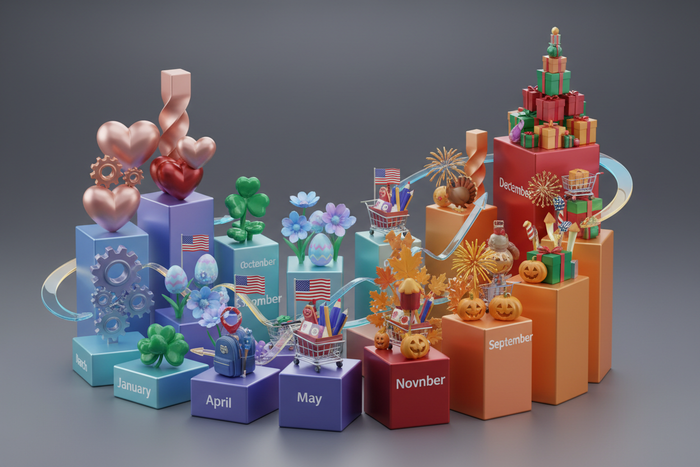
Print-on-demand in the US rarely grows in a smooth line. It moves in waves. Demand rises around calendar moments, cultural routines, gifting windows, and retail weekends—then drops back to baseline. Sellers who scale consistently aren’t “lucky.” They plan for those waves, launch at the right time, and keep execution simple when volume spikes.
This two-part guide is built to help you do exactly that. Part 1 covers the foundational US calendar moments plus the highest-leverage Q1 and Q2 windows. You’ll learn what to plan, when to publish, and how to avoid the common trap of starting too late.
If you’re building your POD operation on Shopify, these windows are easier to execute because you can launch quickly, iterate listings fast, and connect POD apps, payments, and analytics without rebuilding your store each season.

The US Moments That Drive POD Demand (Not Just Holidays)
Most sellers think “Q4 equals money,” and that’s true, but it’s incomplete. US buyers purchase POD items year-round when the product matches a moment. The trick is knowing which moments are predictable, which ones float, and which ones behave like retail events rather than traditional holidays.
Fixed-date holidays (easy to plan)
These happen on the same date every year, which makes them perfect for building a repeatable calendar. Even when “observed” dates change due to weekends, the buyer mindset and search interest still anchor around the actual date.
- New Year’s Day (Jan 1): fresh start messaging, resolutions, identity resets.
- Juneteenth (Jun 19): cultural moment; approach with care and respect.
- Independence Day (Jul 4): summer peak, travel, lake/beach energy (keep tone light).
- Veterans Day (Nov 11): appreciation and community-driven designs (avoid politics).
- Christmas (Dec 25): personalization and gifting; success depends on lead time.
Floating holidays (plan by rule)
These holidays move year to year, but they follow consistent “rules,” which means you can still plan reliably. They also create long-weekend behaviors that influence shopping patterns.
- MLK Day: third Monday of January.
- Presidents’ Day: third Monday of February.
- Memorial Day: last Monday of May.
- Labor Day: first Monday of September.
- Thanksgiving: fourth Thursday of November.
Cultural + retail moments (where POD can spike)
Some moments matter less because of tradition and more because of shopping behavior. These are huge for POD because they reward fast creative, gift-friendly products, and clear “moment-based” messaging.
- Valentine’s Day (Feb 14): couples, humor, gifting.
- Easter (date changes): spring visuals, family sets, “basket stuffer” items.
- Halloween (Oct 31): costumes, matching sets, comedic designs.
- Black Friday/Cyber Monday: retail gravity after Thanksgiving; biggest scale window.
If your store treats these as predictable campaigns instead of random spikes, you stop reacting and start compounding. That shift—calendar-first planning—separates stable POD shops from seasonal hobby stores.
Q1 Scaling Windows (Jan–Mar): Identity, Community, Fresh Start
Q1 often gets underestimated because it comes right after the holiday rush. However, Q1 has one advantage that POD sellers should love: people are actively rewriting who they are. That means identity-based messaging and community-driven design angles can perform strongly, especially when paired with comfortable apparel and practical giftables.
New Year (Jan 1): “New habits / new me” designs
New Year’s demand is less about gifting and more about self-storytelling. Buyers want items that reinforce the person they’re trying to become. That opens room for themes like gym routines, mental reset, productivity, and clean-slate humor.
POD angles that tend to work well:
- Habit identity: “5AM Club,” “Gym era,” “Running is my therapy.”
- Work-life tone: “Focus mode,” “Deep work only,” “No meetings after 3.”
- Wellness language: calm confidence, not toxic positivity.
Best product types for this moment: tees, hoodies, crewnecks, minimalist mugs, desk accessories, and simple tote designs. Keep the message readable at a glance—New Year’s buys are often quick and emotional.
MLK Day + community moments (January)
MLK Day is a meaningful moment and should be handled with restraint. If you approach it, prioritize values and respect over slogans. Many sellers do better by focusing on broadly positive, non-partisan language rather than aggressive messaging that risks polarizing buyers.
Safer angles: unity, service, community pride, positive values. If you cannot execute with care, it’s better to skip the moment than to publish low-context designs.
Valentine’s Day (Feb 14): couples, funny sets, giftables
Valentine’s works because it creates a deadline. Buyers don’t want to “shop forever.” They want something that signals effort, affection, or humor without being complicated. POD wins when it offers fast gifting choices that feel personal.
POD angles for Valentine’s:
- Couple sets: matching tees or hoodies that feel playful, not cringe.
- Relationship humor: inside jokes, “we met online,” “she said yes,” “he’s the snack.”
- Giftables: mugs, sweatshirts, and simple personalized prints.
To reduce returns and support conversion, keep sizing guidance obvious and show couple photos or mockups that match the vibe of your audience.
Presidents’ Day (February): long weekend comfort drops
Presidents’ Day is often treated as “just a sale,” but there’s a better play for POD. It creates a long-weekend shopping behavior where buyers browse for comfortwear, home routines, and casual lifestyle items. That pairs nicely with cozy collections, lounge messaging, and bundle-based offers.
What to emphasize: comfort, seasonal transition (winter to spring), and value without permanent discounting. For example, “2 hoodies = free shipping” or “bundle & save” beats slashing prices in a way that hurts your baseline margins.
Q2 Scaling Windows (Apr–Jun): Gifting + Outdoor Season
Q2 is one of the most reliable seasons for POD because it mixes gifting moments (Mother’s Day/Father’s Day) with retail weekends and the start of outdoor life. Buyers shift from indoor comfort to travel, BBQ, sports, and summer identity. For POD, that means you can sell both gift-first products and lifestyle-first designs.

Easter (March/April): family sets, spring visuals, basket stuffers
Easter timing changes each year, but the buyer behavior stays consistent: families and parents buy coordinating outfits, spring-themed items, and small “extras” that fit into baskets. POD does well when designs are cheerful, clean, and easy to wear beyond one day.
POD angles: family matching sets, kids-friendly humor, soft pastel palettes, light seasonal icons. If you sell products for kids, keep messaging simple and avoid overly detailed art that doesn’t print cleanly.
Memorial Day (May): summer kickoff and a major retail weekend
Memorial Day is not only a holiday—it’s a retail trigger that opens the summer buying mindset. For POD sellers, the opportunity is less about heavy symbolism and more about “season switch” behavior: outdoor weekends, travel, lake days, BBQ hosting, and relaxed fashion.
Design angles that fit the shopping behavior:
- Summer kickoff: “lake mode,” “weekend forecast,” “road trip crew.”
- Outdoor lifestyle: hiking humor, camping minimal text, beach routines.
- Group identity: family trip shirts, friend-group sets, reunion vibes.
Memorial Day is also a smart time to test ad creatives that you’ll later reuse for July 4th, Labor Day, and early Q4. Think of it as both a revenue window and a creative lab.
Mother’s Day and Father’s Day: gift-first personalization and role identity
These are consistently strong for POD because the buyer intent is clear: “I need a gift that feels personal.” That makes personalization and role-based identity designs extremely effective.
| Moment | Buyer Intent | POD Products That Fit | Messaging That Converts |
|---|---|---|---|
| Mother’s Day | Affection + appreciation | Mugs, tees, tote bags, minimalist prints | “Mom life,” “raised by a strong woman,” personalized names |
| Father’s Day | Humor + pride | Tees, hats, hoodies, grilling-themed items | Dad jokes, role pride, “best dad,” hobby-based identity |
Instead of offering thousands of designs, curate a “gift shop” collection with clear categories (funny, sentimental, hobby-based) and limit options to reduce choice fatigue. With Shopify, you can organize collections, highlight bestsellers, and optimize product pages for conversion without needing custom development.
Juneteenth (Jun 19): cultural moment with a careful approach
Juneteenth can spike demand, but it requires maturity in execution. If you choose to participate, treat it as values-first and respect-first. Avoid opportunistic designs and prioritize cultural sensitivity. If you do not have context, partnerships, or a thoughtful approach, skipping is the safer long-term decision for your brand.
For sellers who can execute responsibly, focus on respectful messaging, community support, and designs that do not feel like quick monetization. The long-term goal is trust, not a short-term spike.
How Shopify Helps You Execute Seasonal POD Windows
Seasonal scaling isn’t only about ideas—it’s about execution speed. When moments are time-bound, you need to publish products, create collections, and test offers quickly. That’s where platform efficiency matters.
With Shopify, POD sellers can move faster because they can:
- Launch and update product listings quickly without technical overhead.
- Connect POD apps and fulfillment workflows to reduce manual work.
- Build collections for each moment and feature bestsellers on the homepage.
- Track performance by product, collection, and channel to identify what to scale next.
:quality(75)/2023_11_24_638363856026704203_shopify-la-gi.jpg)
In seasonal POD, speed is not just convenience. It’s competitive advantage. Being early means you capture demand before the market saturates with copycat designs.
Part 1 Wrap-Up: Your Q1–Q2 Playbook in One Line
Q1 wins through identity and fresh-start behavior, while Q2 wins through gifting and summer kickoff energy. If you plan early, keep designs wearable, and treat each moment as a repeatable campaign, you don’t need to chase every trend to grow.
In Part 2, we’ll cover Q3 and Q4—the biggest money season—plus special event spikes, lead-time planning, and a “pick-3” calendar strategy so you scale without burning out.
FAQ
Do I need to run every holiday to scale POD?
No. Consistent POD growth usually comes from executing a few windows extremely well, then repeating those wins year after year with better designs, better offers, and better timing.
What is the best Q1 moment for beginners?
New Year and Valentine’s Day are typically beginner-friendly because the angles are broad, the products are straightforward, and you can test designs quickly without heavy customization.
How early should I publish Mother’s Day listings?
Aim to publish at least 3–4 weeks before the moment, then use the final 10–14 days for creative testing, gift-focused bundles, and product page optimization.


