
How Visual Consistency Improves Ecommerce Conversion Rates
Learn how visual consistency improves ecommerce conversion rates by building trust, reducing friction, and guiding shopper decisions—without relying on discounts.

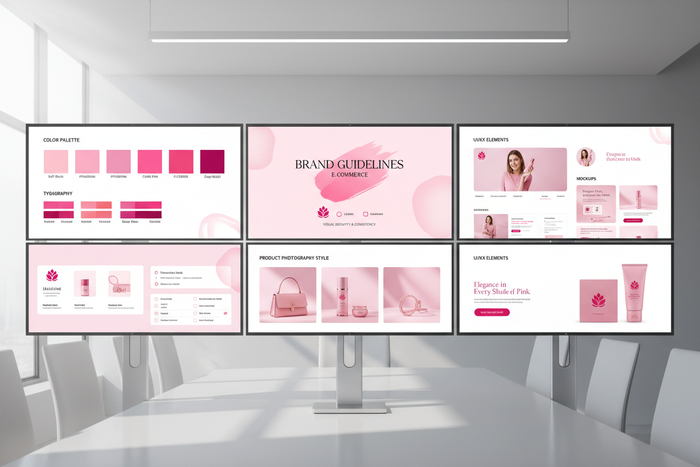
Visual consistency plays a major role in that judgment. When colors, badges, and layout feel aligned, shoppers feel confident. When visuals clash or feel improvised, hesitation increases. This article explains how visual consistency improves conversion rates - and how Shopify sellers achieve it without redesigning their stores.
How First Impressions Affect Ecommerce Trust
In ecommerce, trust is built long before checkout. Research consistently shows that users decide whether to stay or leave a website within the first few seconds.
During this short window, shoppers are not analyzing features or pricing. They are answering subconscious questions:
- Does this store look professional?
- Does it feel safe to buy here?
- Does this brand seem legitimate?
Visual signals carry more weight than copy at this stage. Consistent colors, spacing, and design patterns create a sense of order. That order translates into perceived reliability.
When a store looks visually cohesive, shoppers assume similar care has been applied to products, fulfillment, and support. When it looks inconsistent, doubt creeps in—even if the products themselves are strong.
What Visual Inconsistency Looks Like on Product Pages
Visual inconsistency is rarely intentional. It often appears gradually as stores add tools, promotions, and content over time.
Common examples of inconsistency on product pages include:
- Product labels in colors that don’t match brand palettes
- Badges with different shapes or fonts across collections
- Size charts styled differently from the rest of the page
- Promotional elements that feel “bolted on” rather than integrated
Individually, these issues may seem minor. Together, they create visual noise. Shoppers sense that something feels off, even if they can’t articulate why.
This lack of cohesion increases cognitive load. Instead of focusing on product benefits, shoppers spend mental energy processing mismatched visuals. The result is slower decisions—or abandonment.
Branding Consistency as a Trust Signal
Branding consistency is not just about aesthetics. It is a trust signal.
When visual elements follow a consistent system—colors, typography, spacing—shoppers perceive control and intention. This perception lowers perceived risk.
Consistent branding helps in several ways:
- It reinforces brand recognition across pages
- It reduces confusion during product comparison
- It creates a calm, predictable shopping experience
Importantly, consistency does not mean uniformity. A store can highlight promotions, best sellers, or new arrivals—without breaking visual harmony. The key is alignment, not sameness.
High-converting stores treat visual elements as part of the product experience, not decorative extras.
Product Labels That Match Your Store’s Design
Product labels are one of the most powerful—and most misused—visual elements in ecommerce.
When designed well, labels guide attention and speed up decisions. When poorly designed, they undermine trust.
Effective product labels share a few characteristics:
- They use brand-aligned colors and typography
- They are placed consistently across products
- They highlight meaning, not noise
- They complement the layout instead of competing with it
Labels like “Best Seller” or “New Arrival” work because they compress information. But their impact depends on visual execution.
If a label looks out of place, shoppers may question its credibility. If it blends naturally into the design, it feels like part of the store—not a sales tactic.
How Shopify Sellers Customize Labels Without Design Work
Maintaining visual consistency at scale is difficult without the right tools. Many Shopify sellers rely on multiple apps that introduce conflicting styles.
Lavar helps solve this by allowing merchants to customize product labels and size charts to match their existing brand design.
Instead of forcing a fixed look, Lavar gives sellers control over:
- Colors that align with brand palettes
- Styles that match the store’s visual tone
- Placement that respects existing layouts
This flexibility makes it possible to introduce helpful visual cues—like labels and size charts - without disrupting the store’s aesthetic.
Because Lavar works across Shopify themes and devices, sellers can maintain consistency whether shoppers browse collections, product pages, or mobile views.
The result is not just better visuals, but smoother decision-making and higher confidence throughout the shopping journey.
FAQ
What is visual consistency in ecommerce?
Visual consistency refers to using aligned colors, typography, spacing, and design elements across a store to create a cohesive experience.
How does visual consistency affect conversion rates?
Consistent visuals reduce cognitive friction, increase trust, and help shoppers make decisions faster.
Do product labels harm premium brand perception?
No, when styled correctly. Labels that match brand design enhance clarity without lowering perceived value.
Is visual consistency more important than pricing?
In many cases, yes. Shoppers often hesitate due to uncertainty, not price. Visual clarity helps resolve that hesitation.
Can I customize product labels without design skills?
Yes. Tools like Lavar allow Shopify sellers to customize labels and size charts visually, without coding or redesign work.


