
How to Make a Size Chart That Actually Feels “Accurate”


Most size charts fail for one simple reason.
They focus on being technically correct instead of psychologically reassuring.
Shoppers don’t return fashion items because the product quality is bad. They return them because the size they chose didn’t match what they expected. In most cases, that mismatch begins long before checkout—right at the size chart.
This article breaks down what makes a size chart feel accurate to shoppers, why accuracy is as much about perception as measurement, and how Shopify brands implement high-confidence size guides without custom development.

Why “Accurate” Size Charts Are About Trust, Not Math
Accuracy in ecommerce sizing is often misunderstood.
From a merchant’s perspective, a size chart is accurate if the numbers are correct. From a shopper’s perspective, a size chart is accurate if it reduces doubt.
Buyers can’t try items on. They can’t feel fabric stretch. They can’t compare fit across brands in real time. What they need is reassurance that the size they choose will match how they imagine the product fitting.
If a size chart creates hesitation, forces mental effort, or feels disconnected from the product visuals, it fails—regardless of how precise the measurements are.
Why Shoppers Hesitate When Choosing Sizes Online
Online shoppers rarely distrust sizing because they think the numbers are wrong.
They hesitate because they are unsure how those numbers apply to them.
- They don’t know where measurements are taken
- They aren’t sure if the fit is tight, relaxed, or oversized
- The chart is hard to read, especially on mobile
When sizing requires interpretation, shoppers default to guessing. And guessed purchases are far more likely to be returned.
How Unclear Size Information Drives Return Rates
Returns don’t start at fulfillment. They start at expectation-setting.
When buyers imagine one fit and receive another, disappointment follows—even if the product itself is well made.
The hidden cost of unclear size charts includes:
- Higher reverse logistics expenses
- Support tickets related to sizing confusion
- Inventory disruption from returned stock
Most importantly, it erodes confidence in future purchases. A shopper who returns once due to sizing uncertainty is less likely to buy again.
What Makes a Size Chart Actually Feel Accurate
Effective size charts reduce interpretation.
They do not overwhelm shoppers with data. Instead, they guide them toward a confident decision.
Clear measurement visuals
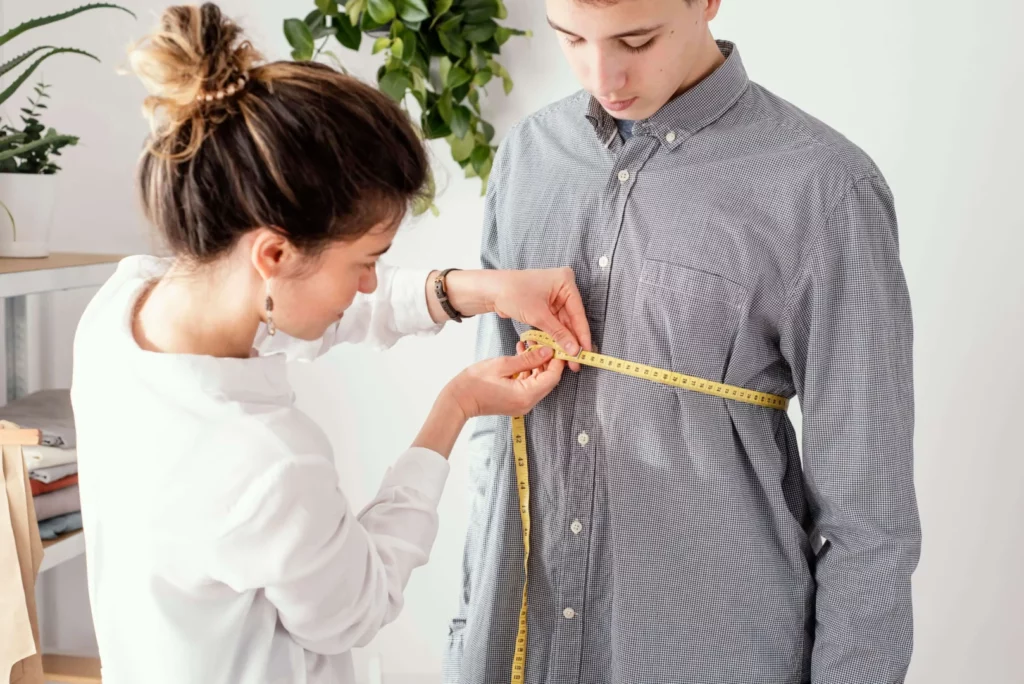
Text alone is insufficient. Shoppers need to see where measurements apply on the product.
Visual diagrams that show chest, waist, sleeve, or length placement remove ambiguity and anchor expectations.
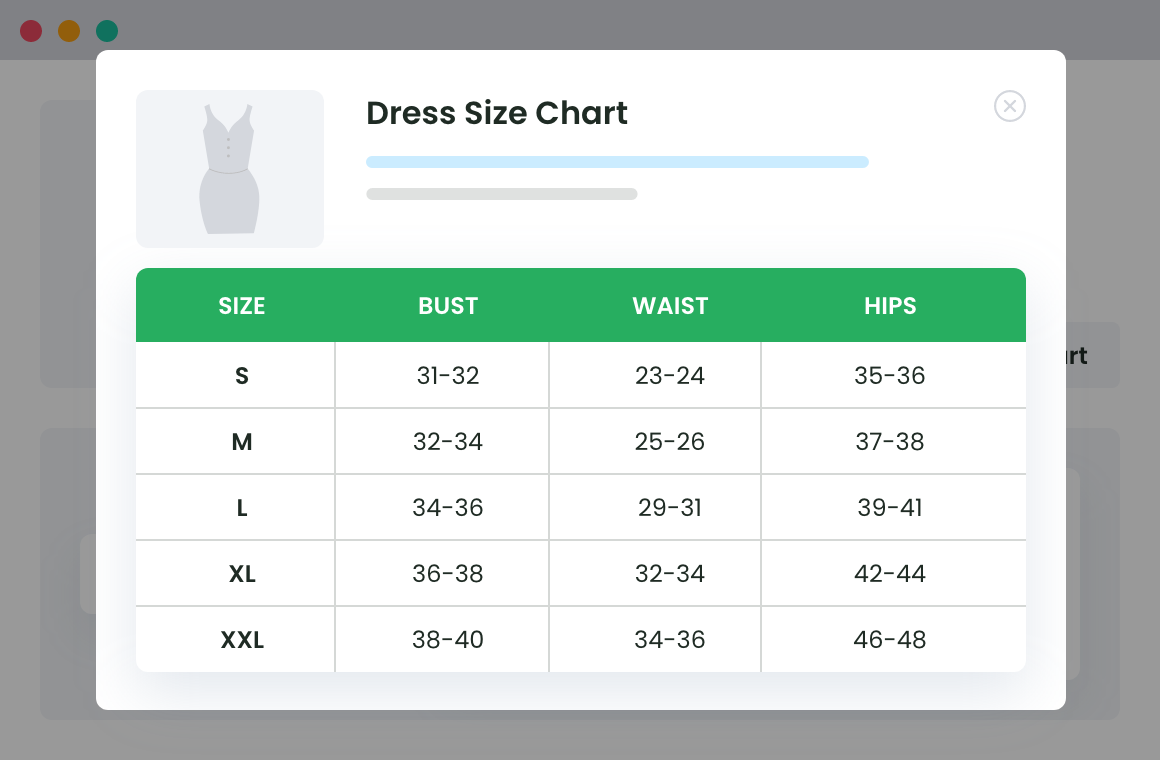
Tables designed for scanning
Size charts should be scannable at a glance.
Clean spacing, consistent units, and limited columns help shoppers compare sizes quickly—especially on mobile devices.
Simple, consistent language
Terminology should remain consistent across product pages.
Switching between “bust” and “chest,” or “length” and “height,” forces shoppers to second-guess their understanding.
Turning Size Charts into a Conversion Asset
Many stores treat size charts as a compliance requirement—something that exists because it has to.
High-performing stores treat them as conversion tools.
A well-designed size chart reduces hesitation at the exact moment shoppers are deciding whether to add to cart. Instead of interrupting the flow, it supports it.
When size guidance feels helpful rather than technical, shoppers stay focused on the product—not the risk.
Why Generic Size Charts Often Backfire
Reusing one generic size chart across multiple products may seem efficient, but it often undermines trust.
Different fits, fabrics, and silhouettes require different context. A single chart cannot accurately represent a slim-fit jacket, a relaxed tee, and a structured dress equally well.
Shoppers notice when size information feels disconnected from the product they’re viewing. That disconnect introduces doubt.
How Shopify Brands Implement Accurate Size Charts Without Custom Development
Building product-specific size charts traditionally required theme edits or custom code.
This is where Lavar becomes a practical solution.

Lavar allows Shopify merchants to create customizable size charts that match brand style and product context—without touching code.
- Create size charts tailored to specific products or collections
- Add visual measurement guides that clarify fit
- Ensure charts are mobile-friendly and easy to scan
By integrating size guidance directly into the product page experience, Lavar helps turn sizing from a friction point into a confidence signal.
Accuracy Is About Reducing Cognitive Load
Shoppers don’t want to calculate.
They want to recognize.
An accurate-feeling size chart reduces the number of decisions a buyer has to make. It replaces uncertainty with clarity and keeps attention on the product itself.
This is especially important on mobile, where attention spans are shorter and screen space is limited.
Final Thoughts — Accuracy Is a Feeling You Design
You don’t reduce returns by lowering prices.
You reduce returns by removing uncertainty.
A size chart that feels accurate doesn’t rely on perfect measurements alone. It combines clarity, visual guidance, and context to help shoppers trust their choice.
When sizing feels obvious, buying feels easier.
FAQ
Do detailed size charts slow down conversion?
No. When designed for scanning and clarity, size charts reduce hesitation and support faster decisions.
Should every product have its own size chart?
Products with different fits or silhouettes benefit from tailored size guidance.
Is custom development required to build effective size charts?
No. Tools like Lavar allow merchants to create and manage accurate size charts without code.